No products in the cart.


The air defense equation has completely flipped. Modern Counter-Unmanned Aerial Vehicle (C-UAV) doctrine no longer relies solely on multi-million-euro missile systems to neutralize high-speed airborne threats. Instead, the tactical edge belongs to electric interceptors — platforms purpose-built to scramble, acquire, and kinetically engage targets at blistering speeds exceeding 700 km/h.
At these extreme velocities, aerodynamic drag scales exponentially. Motor RPM and propeller draw peak instantly. The airframe design can be flawless, the guidance algorithms cutting-edge, but without an energy storage system capable of surviving extreme discharge rates without thermal runaway or voltage collapse, the interceptor never hits its target envelope.
For European and North American C-UAV developers, the bottleneck is clear: Power-to-weight, transient discharge stability, and supply chain sovereignty.
The Physics of 700+ km/h: Zero Margin for Voltage Sag! Pushing an electric airframe past 700 km/h demands unprecedented performance from the pack:
Escaping the Chinese Supply Chain Trap
Defense and dual-use aerospace manufacturers face an escalating strategic risk: heavy reliance on non-allied component sourcing. Between export bans, tightening Western defense procurement mandates (including NDAA compliance and European strategic autonomy requirements), sourcing battery packs from China creates critical vulnerability. If your platform’s power system depends on single-source, non-allied manufacturers, platform certification and defense procurement qualification face major roadblocks.
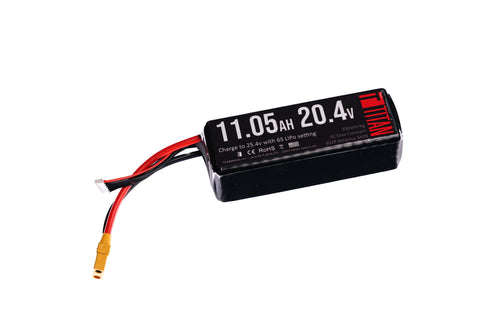
Through the PowerChain consortium, Titan Flight is de-risking this exact pipeline. We offer aerospace developers a clear, secure supply chain built around audited, reliable, and strictly non-Chinese allied-nation cell sourcing.
Localized Manufacturing: Tilburg (NL) and the USA
Titan Flight doesn’t just design battery configurations on paper — we engineer, test, and assemble them domestically:
Operating production on both sides of the Atlantic allows us to deliver tight turnaround times, direct engineering-to-engineering collaboration, and compliance with European and US defense supply regulations. From custom form-factor geometries and advanced spot-welding busbars to integrated Battery Management Systems (BMS) tuned for high-speed flight envelopes, our packs are built specifically for your airframe's dimensional constraints.
Calling All C-UAV & Kinetic Interceptor Teams
If your engineering team is designing next-generation interceptor platforms, high-speed loitering munitions, or sprint-profile UAVs aiming for 500 to 700+ km/h, the power subsystem should not be an afterthought.
Titan Flight is actively partnering with defense OEMs, aerospace startups, and defense consortiums to engineer custom high-output packs that achieve mission velocity while guaranteeing supply sovereignty.
Let’s discuss your current platform specs and discharge curves.